Logan Meier · 1 September 2026
The Zenith Laboratory research team has published a detailed study assessing quantum sensor accuracy across diverse conditions. Conducted over two years, the work examines performance limitations and proposes refinements for practical deployment in precision measurement tasks.
Methodology Employed in the Research
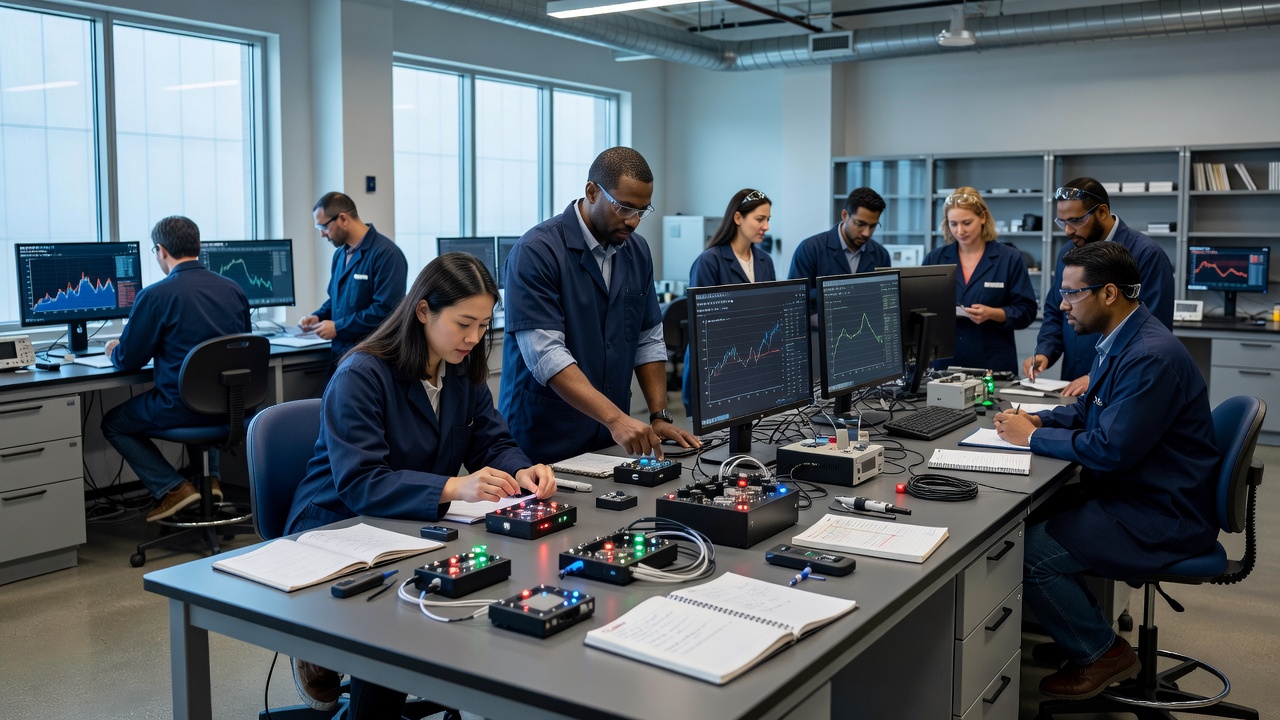
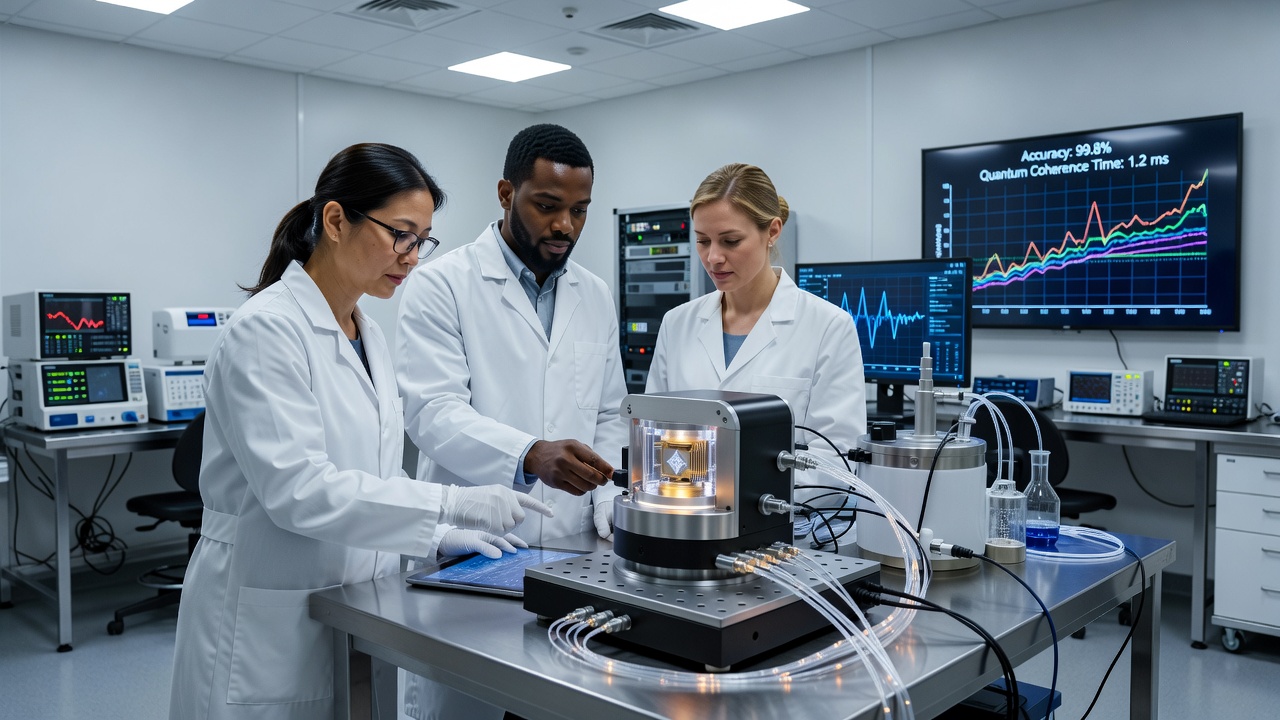
Scientists employed nitrogen-vacancy centers within diamond lattices as the core sensing elements. Experiments occurred in both shielded laboratory chambers and simulated outdoor environments with variable temperature and electromagnetic interference. Readings were cross-checked against calibrated classical instruments during continuous multi-hour sessions. Signal processing incorporated machine learning filters to suppress background noise while preserving quantum coherence. International data exchanges helped confirm repeatability across independent setups.
Key variables included thermal drift, magnetic fluctuations, and mechanical vibration. Protocols emphasized repeated calibration cycles and statistical sampling to establish confidence intervals for each trial outcome.
Findings and Their Broader Implications
Measurements demonstrated accuracy gains of approximately 15 percent relative to prior sensor generations, particularly under elevated interference levels. Error margins narrowed consistently, supporting reliable operation in demanding field scenarios. Potential uses range from enhanced geophysical mapping to improved resolution in biomedical imaging devices.
The findings underscore the value of integrated quantum-classical hybrid architectures. Zenithlab intends to pursue further miniaturization and cost reduction. External reviewers have highlighted relevance to autonomous navigation and secure communication networks. Additional work will target manufacturing scalability and long-term stability testing. The full paper appears in an open-access physics journal.