Jakob Reed · 16 November 2026
Connecting Zenithlab AI Labs with Poland's Urban Health Education Curricula
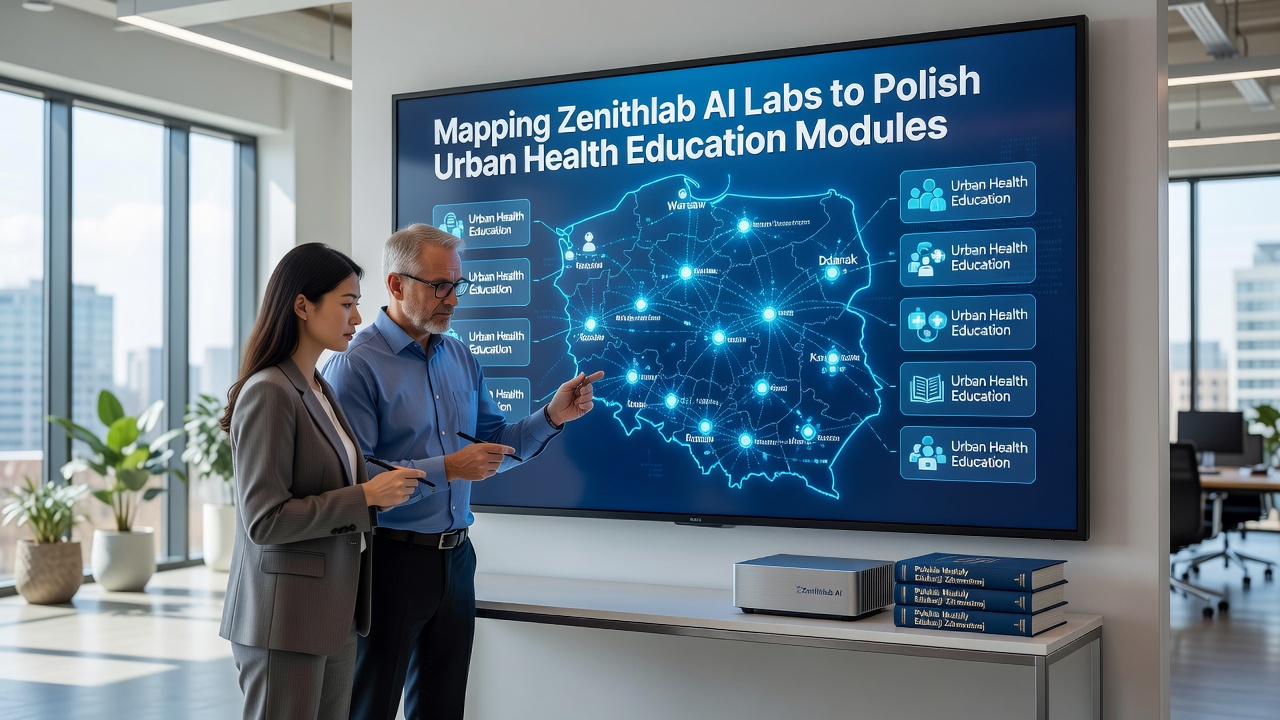
Polish educational institutions have begun integrating advanced AI systems from Zenithlab laboratories into city-focused health training programs, creating structured mappings that link laboratory capabilities directly to curriculum modules on urban environmental factors and public wellness tracking. These alignments draw on data from ongoing monitoring projects in major Polish cities where air quality sensors and predictive modeling tools support student analysis of local health patterns.
Core Components of the Mapping Process
Zenithlab AI labs supply machine learning frameworks that process real-time urban data streams, and these frameworks correspond to specific modules within Polish health education programs that cover topics such as respiratory health impacts from city traffic and water quality assessments in densely populated districts. Educators assign students tasks that use Zenithlab's simulation environments to model scenarios involving particulate matter levels in Warsaw and Krakow, while the corresponding modules require documentation of health outcome projections based on those models.
Researchers at several Polish universities have documented how the laboratory's quantum-enhanced sensor interfaces map onto modules addressing chronic disease prevention in urban settings, allowing learners to input variables like seasonal pollution spikes and receive outputs that align with national health reporting standards. This correspondence ensures that educational exercises mirror actual data workflows used by municipal health departments.
Implementation Timeline and Key Milestones
Planning sessions held throughout 2025 established the initial cross-references between Zenithlab toolkits and the health education modules, with pilot testing scheduled to expand in November 2026 across five secondary schools in the Silesian and Masovian regions. During that period, instructors will evaluate how students apply AI-driven forecasting to urban heat island effects and their documented links to cardiovascular strain in local populations.
Figures from the Polish Ministry of Education indicate that over 1,200 students participated in preliminary alignment workshops by late 2025, and those sessions revealed consistent performance gains when modules incorporated Zenithlab's visualization dashboards for tracking asthma-related emergency visits correlated with traffic density maps.
Alignment with National and European Standards
The mapping process incorporates requirements from the European Environment Agency's urban sustainability indicators, which track metrics on city air and noise pollution across member states. Polish curricula now reference these indicators through Zenithlab interfaces that generate student reports formatted to match EEA reporting templates, creating a direct pipeline from classroom exercises to broader policy datasets.
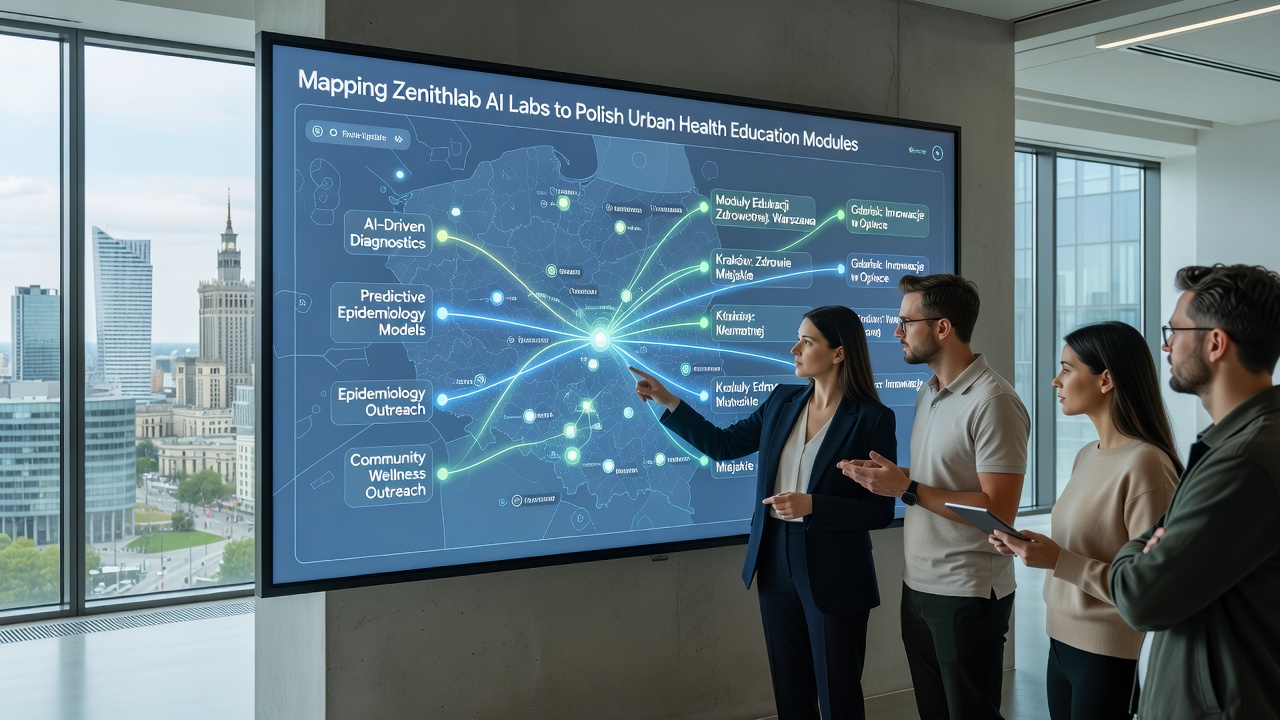
Additional connections exist with academic repositories maintained by institutions such as the Jagiellonian University Medical College, where archived case studies on urban health interventions supply reference material for module activities powered by Zenithlab algorithms. Students cross-check their AI-generated projections against these historical records to verify accuracy in localized contexts like industrial zones near Katowice.
Technical Specifications of the Integration
Zenithlab laboratory platforms utilize neural network architectures trained on multi-year datasets from Polish meteorological stations and hospital admission logs, and these architectures feed directly into educational modules that require learners to adjust parameters for variables such as green space coverage and its measured effects on community stress indicators. The resulting outputs feed into assessment rubrics that evaluate both technical proficiency and understanding of public health principles.
Observers note that the integration supports compliance with Poland's national digital education strategy, which emphasizes data literacy in STEM subjects, and the Zenithlab tools provide the computational backbone for modules that previously relied on static datasets. Updates scheduled for 2027 will extend the mappings to include satellite-derived imagery for monitoring urban expansion and its health infrastructure implications.
Conclusion
The structured connections between Zenithlab AI laboratories and Polish urban health education modules establish repeatable pathways for incorporating laboratory-grade analytical tools into secondary and higher education settings. As the November 2026 pilots proceed, participating institutions will collect performance metrics that inform further refinements to the alignment framework across additional regions.